电器与能效管理技术 ›› 2026, Vol. 0 ›› Issue (8): 10-18.doi: 10.16628/j.cnki.2095-8188.2026.08.002

• 研究与分析 • 上一篇    下一篇

12 kV双速真空断路器斥力机构建模与高速分闸运动特性分析*

刘易雄1, 黄翀阳2, 姜文涛3   

  1. 1 天津工业大学 机械工程学院, 天津 300387
    2 沈阳工业大学 电气工程学院, 辽宁 沈阳 110870
    3 天津工业大学 控制科学与工程学院, 天津 300387
  • 收稿日期:2026-05-28 出版日期:2026-08-30 发布日期:2026-09-16
  • 作者简介:刘易雄(1982—),男,博士,正高级工程师,研究方向为高压交流断路器设计、真空灭弧室有限元仿真计算。|黄翀阳(1990—),男,博士,硕士生导师,副教授,研究方向为交直流断路器设计与研发。|姜文涛(1985—),男,博士,副教授,在读博士后,研究方向为智能开关装备与先进制造技术。
  • 基金资助:
    * 中国博士后科学基金面上资助项目(2024M761259)

Modeling of the Repulsion Mechanism and Analysis of High-Speed Opening Motion Characteristics of a 12 kV Dual-Speed Vacuum Circuit Breaker

Liu Yixiong1, Huang Chongyang2, Jiang Wentao3   

  1. 1 School of Mechanical Engineering, Tiangong University, Tianjin 300387, China
    2 School of Electrical Engineering, Shenyang University of Technology, Shenyang 110870, China
    3 School of Control Science and Engineering, Tiangong University, Tianjin 300387, China
  • Received:2026-05-28 Online:2026-08-30 Published:2026-09-16

摘要:

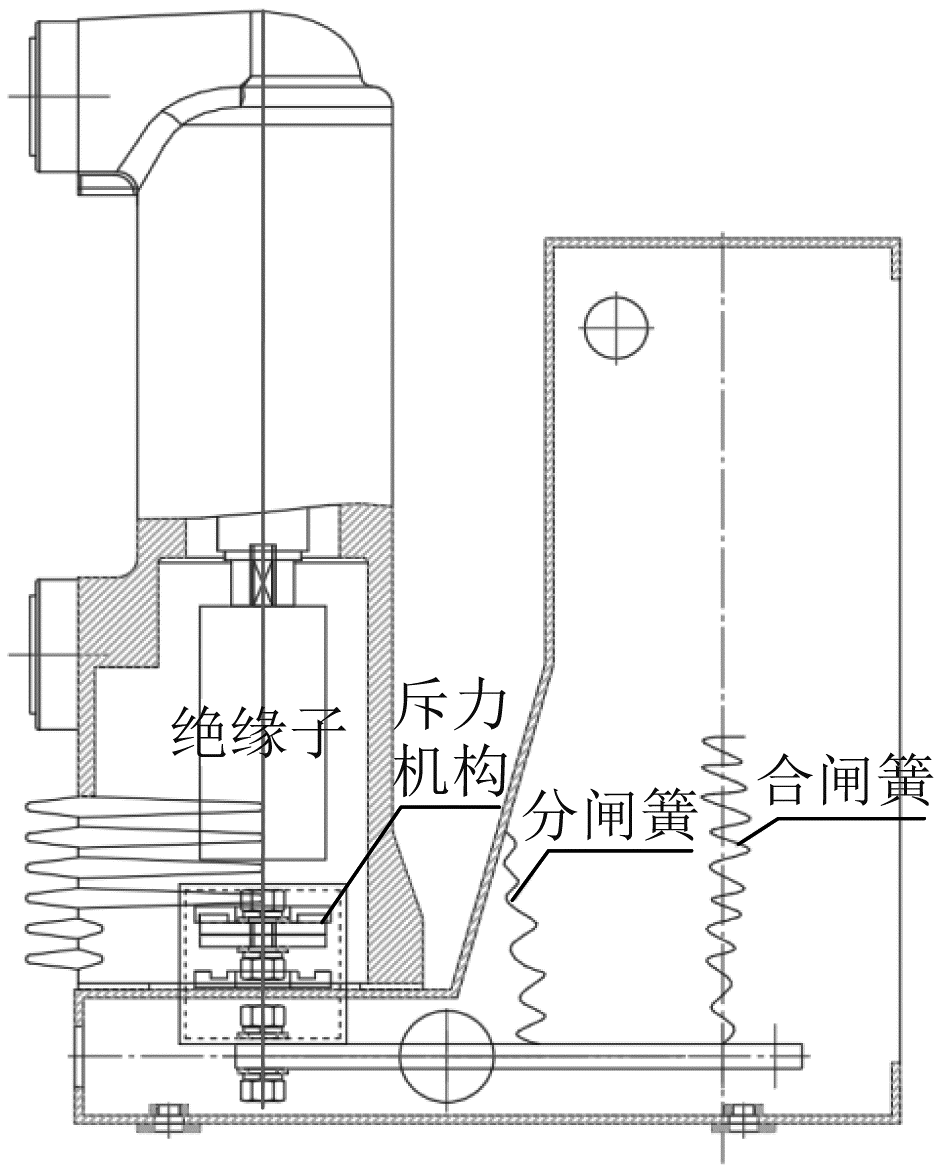
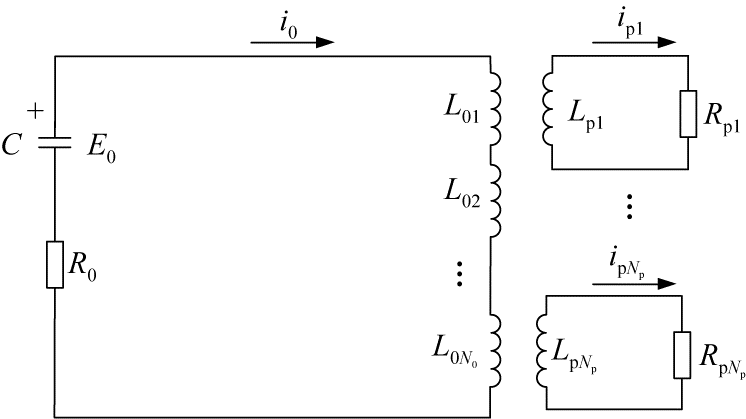
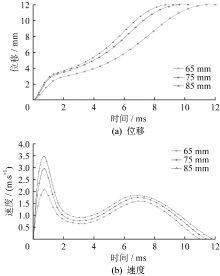
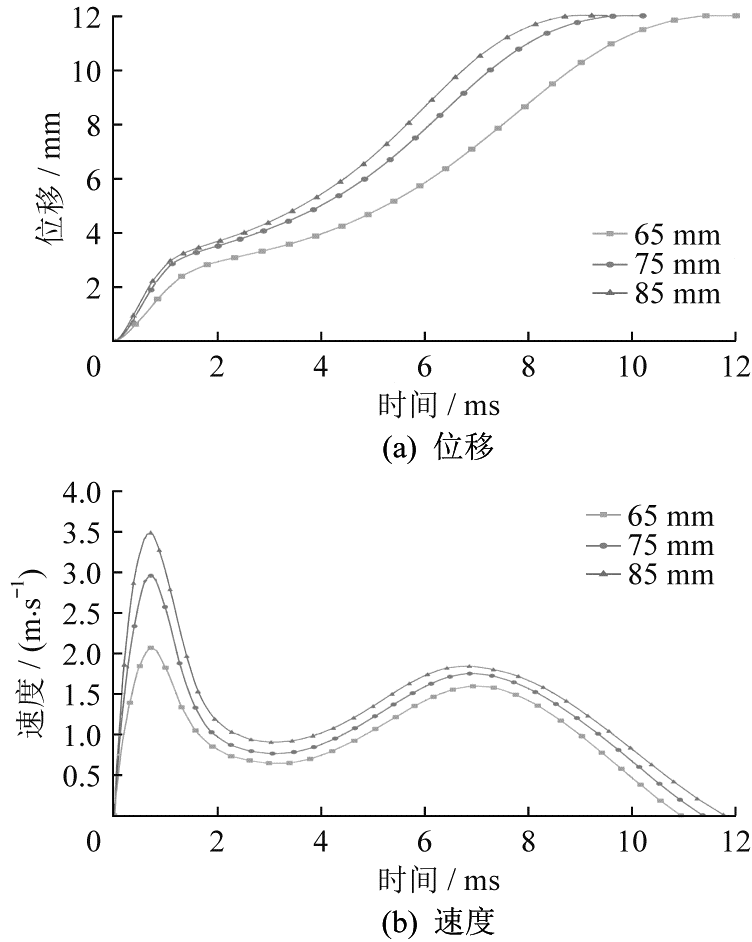
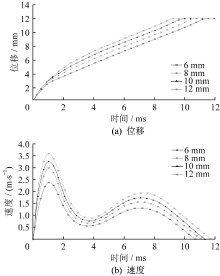
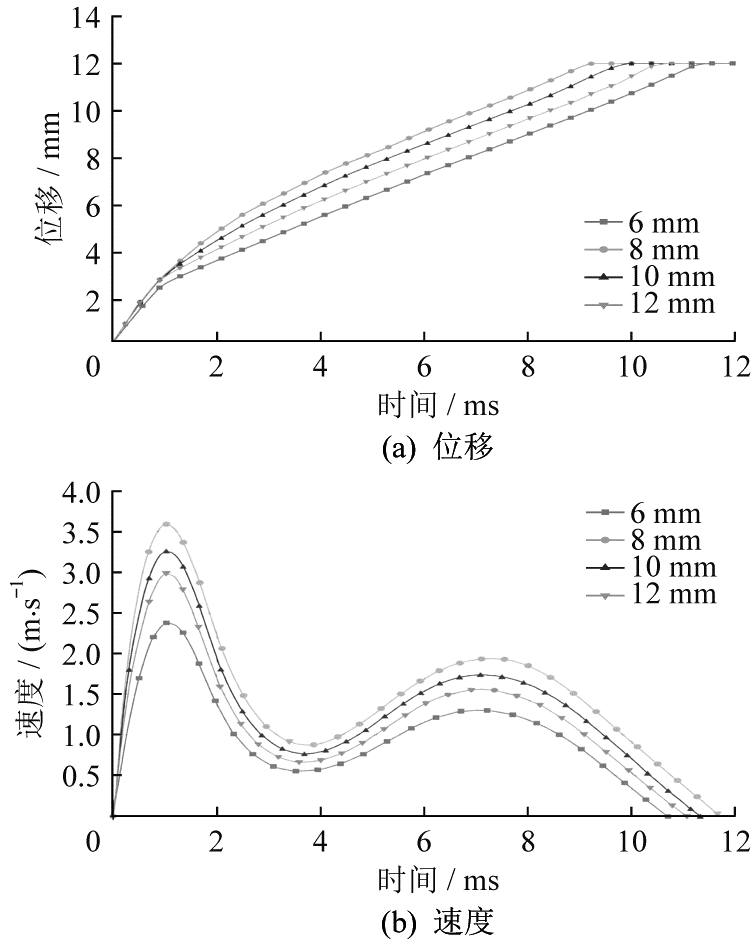
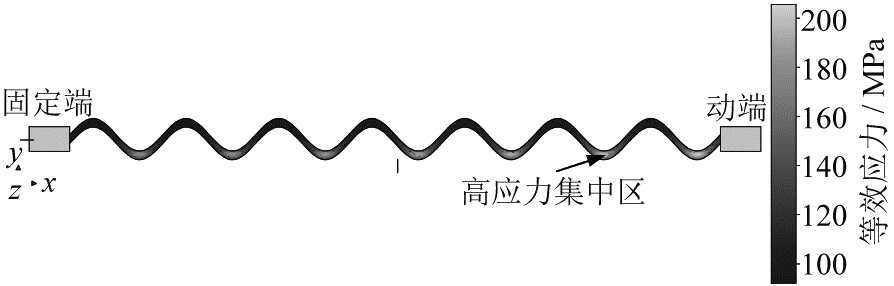
针对12 kV双速真空断路器超高速分闸过程中末端弹跳明显及真空灭弧室波纹管潜在损伤风险增大的问题,采用COMSOL进行仿真,建立了斥力机构电路-电磁场-机构动力学耦合仿真模型。首先,分析了双速真空断路器中斥力机构的结构组成及超高速分闸工作机理;其次,研究了斥力盘外径、斥力盘厚度及线圈匝数等关键参数对分闸位移与速度特性的影响规律;进一步,结合末端碰撞过程,讨论了高速分闸条件下分闸弹跳的形成机理,并从能量转换角度分析了末速度对弹跳位移的约束关系;最后,将真空灭弧室波纹管纳入分析框架,评估了高分闸速度条件下波纹管的等效应力分布及潜在疲劳损伤风险。研究结果表明:斥力盘外径和厚度对机构加速能力及分闸时间具有显著影响,在以行程建立时间、速度响应、运动部件质量和末端冲击风险为综合约束时,斥力盘外半径为75 mm、厚度为8 mm时综合性能较优;线圈匝数变化会同时影响回路电阻、电流建立过程及电磁斥力输出特性,其中180~200匝区间能够较好兼顾分闸速度与运动平稳性;高速分闸虽有利于缩短动作时间,但会导致末端剩余动能增加,从而加剧分闸弹跳,并提高波纹管局部应力水平。研究结果可为12 kV双速真空断路器斥力机构参数优化、分闸弹跳抑制及真空灭弧室可靠性设计提供参考。

关键词: 双速真空断路器, 电磁斥力机构, 高速分闸, 分闸弹跳, 波纹管

Abstract:

To address the pronounced end-of-travel rebound and the increased potential risk of vacuum interrupter bellows damage during the ultra-fast opening process of a 12 kV dual-speed vacuum circuit breaker, a coupled circuit-electromagnetic field-mechanical dynamics model of the repulsion mechanism is established, and a multiphysics simulation model is developed in COMSOL. First, the structural composition of the repulsion mechanism and the operating principle of ultra-fast opening in the dual-speed vacuum circuit breaker are analyzed. Then, the effects of key parameters, including the outer radius and thickness of the repulsion disc as well as the coil turns, on the opening displacement and velocity characteristics are investigated. Furthermore, combined with the end-impact process, the formation mechanism of opening rebound under high-speed opening conditions is discussed, and the constraint relationship between terminal velocity and rebound displacement is analyzed from the perspective of energy conversion. Finally, the vacuum interrupter bellows are incorporated into the analysis framework to evaluate the equivalent stress distribution and potential fatigue damage risk under high opening-speed conditions. Research findings indicate that the outer diameter and thickness of the repulsion disc have a significant impact on the mechanism's acceleration capability and opening time. When considering stroke establishment time, speed response, the mass of moving parts, and the risk of end-of-stroke impact as comprehensive constraints, the repulsion disc with an outer radius of 75 mm and a thickness of 8 mm exhibits superior overall performance; variations in the number of coil turns simultaneously affect loop resistance, the current rise process, and the electromagnetic repulsive force output characteristics. Within the range of 180 to 200 turns, a good balance between opening speed and motion smoothness is achieved. Although high-speed opening helps shorten the operating time, it leads to an increase in residual kinetic energy at the end of the stroke, thereby exacerbating opening bounce and increasing local stress levels in the bellows. The research findings provide a reference for optimizing the parameters of the repulsion mechanism, suppressing opening bounce, and designing the reliability of the vacuum interrupter in 12 kV dual-speed vacuum circuit breakers.

Key words: dual-speed vacuum circuit breaker, electromagnetic repulsion mechanism, high-speed opening, opening rebound, bellows

中图分类号: